


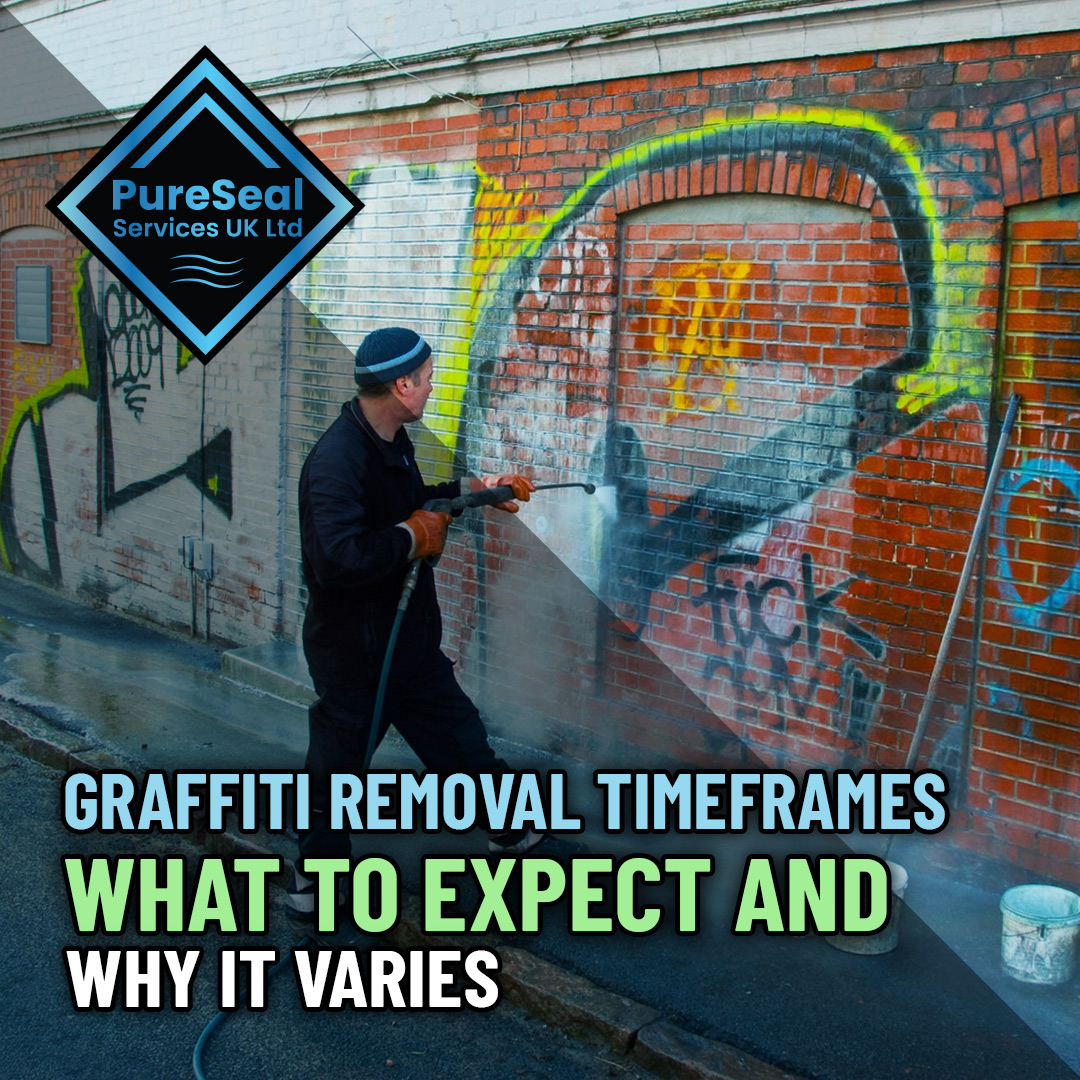
How Long Does Graffiti Removal Take?
Graffiti can appear overnight and instantly change how a property, street, or business is perceived. Whether it’s a small tag on a brick wall or a large mural sprayed across shutters, one of the first questions property owners ask is simple:
How long does graffiti removal take?
The honest answer is: it depends. Graffiti removal times vary widely based on surface type, size, paint used, location, access, and the method required to remove it safely and effectively. This guide explores all of those factors in detail, with practical time estimates, tables, and real-world scenarios to give you a clear and realistic understanding of the process 😊
Why Removal Time Matters
Graffiti is more than a cosmetic issue. The longer it stays, the more damage it can cause and the harder it often becomes to remove. Paint can cure, sink deeper into porous materials, or react with weather conditions. From a business perspective, visible graffiti can deter customers, reduce property value, and create the impression of neglect.
Understanding how long removal takes helps with:
- Planning access and downtime
- Estimating labour costs in pounds (£)
- Minimising disruption to tenants or customers
- Choosing the correct removal method
- Managing expectations realistically
Average Graffiti Removal Time (Quick Overview)
Before diving deeper, here is a broad overview of typical graffiti removal times under normal conditions:
| Graffiti Size | Surface Type | Typical Time Range |
|---|---|---|
| Small tag (under 1 m²) | Smooth, non-porous | 20–45 minutes |
| Medium area (1–5 m²) | Brick or stone | 1–3 hours |
| Large graffiti (5–15 m²) | Mixed surfaces | 3–6 hours |
| Full wall or shutters | Porous or painted | 1–2 days |
These are averages. Some jobs take less time, while others require multiple visits ⏳
Key Factors That Affect Graffiti Removal Time
1. Surface Type
The surface is the single most important factor affecting removal time.
Non-Porous Surfaces
Examples include:
- Metal shutters
- Glass
- Plastic panels
- Polished stone
Paint sits on top of these surfaces rather than soaking in, making removal faster.
Typical time: 15–60 minutes
Semi-Porous Surfaces
Examples include:
- Painted walls
- Sealed concrete
- Render
Some paint penetration occurs, often requiring dwell time for chemicals.
Typical time: 1–3 hours
Porous Surfaces
Examples include:
- Brickwork
- Natural stone
- Bare concrete
- Sandstone
Paint absorbs deeply, making removal slower and more delicate.
Typical time: 2 hours to multiple days
2. Size and Coverage of the Graffiti
Unsurprisingly, larger graffiti takes longer to remove. However, complexity also matters.
| Size Category | Approximate Coverage | Time Impact |
| Small | Single tag or symbol | Minimal |
| Medium | Multiple tags or throw-ups | Moderate |
| Large | Murals or layered graffiti | Significant |
A small but heavily layered tag can sometimes take longer than a larger, single-layer piece.
3. Type of Paint or Marker Used
Different graffiti materials behave very differently.
| Material Used | Removal Difficulty | Time Effect |
| Aerosol spray paint | Medium | Standard |
| Permanent marker | High | Slower |
| Bitumen or tar paint | Very high | Much slower |
| Etching acid | Severe | Repair required |
Permanent markers and etching chemicals can double or triple removal time, and in some cases, complete removal may not be possible without surface repair.
4. How Long the Graffiti Has Been There
Fresh graffiti is easier to remove than older graffiti.
| Age of Graffiti | Typical Removal Time |
| Under 24 hours | Fastest |
| 2–7 days | Moderate |
| Several weeks | Slower |
| Months or years | Complex |
Older paint hardens and bonds more strongly with the surface, often requiring repeated treatments.
5. Removal Method Used
Different methods have very different time implications.
Chemical Removal
- Chemicals are applied and left to dwell
- Paint is softened before removal
Time impact: Medium to high (due to waiting time)
Pressure Washing
- Often combined with chemicals
- Faster on smooth surfaces
Time impact: Low to medium
Abrasive Methods
- Sanding, blasting, or mechanical action
- Used carefully to avoid damage
Time impact: High but effective
Repainting or Coating
- Used when removal isn’t viable
- Includes drying time
Time impact: High (often 1–2 days)
Typical Timeframes by Surface Type
Brickwork
Brick is porous and absorbs paint deeply. Removal usually involves chemicals, agitation, and controlled pressure washing.
Typical time:
- Small area: 1–2 hours
- Medium wall: 3–6 hours
- Large wall: 1–2 days
Older or soft brick may require multiple visits.
Metal Shutters
Metal shutters are relatively quick to clean but often heavily tagged.
Typical time:
- Small tag: 20–40 minutes
- Full shutter: 1–2 hours
Repainting may add an extra day for curing.
Painted Walls
Painted surfaces are unpredictable. Removal may strip the underlying paint.
Typical time:
- Partial removal: 1–3 hours
- Full repaint: 1–2 days
Glass
Glass is one of the fastest surfaces to clean.
Typical time:
- Small tag: 10–20 minutes
- Large coverage: 30–60 minutes
Etched graffiti cannot be cleaned and requires replacement or polishing.
Single Visit vs Multiple Visits
Not all graffiti can be removed in one session.
| Scenario | Visits Needed |
| Fresh spray paint on metal | 1 |
| Old graffiti on brick | 2–3 |
| Acid-etched glass | Repair only |
| Heavily layered paint | Multiple |
Each visit adds time, labour, and cost, often calculated in pounds (£) per hour.
How Weather Affects Removal Time
Weather plays a major role, especially for exterior graffiti.
- Rain: Can delay work or dilute chemicals
- Cold temperatures: Slow chemical reactions
- Extreme heat: Causes rapid drying and streaking
- Wind: Makes controlled washing harder
Bad weather can extend a one-day job into two or three days 🌧️
Time vs Cost Relationship
While this article focuses on time, time and cost are closely linked.
| Time Required | Typical Cost Range (£) |
| Under 1 hour | £80–£150 |
| 2–4 hours | £200–£400 |
| Full day | £500–£800 |
| Multi-day | £1,000+ |
Longer removal times usually reflect surface complexity rather than inefficiency.
Can Graffiti Be Removed Faster?
Yes, in many cases.
Ways to Reduce Removal Time
- Acting quickly after graffiti appears
- Applying protective anti-graffiti coatings
- Keeping surfaces well maintained
- Avoiding DIY methods that set the paint
A protected surface can often be cleaned in minutes instead of hours.
When Removal Takes Longer Than Expected
Sometimes graffiti removal exceeds initial estimates. Common reasons include:
- Hidden layers of older graffiti
- Fragile or historic surfaces
- Unexpected paint reactions
- Access issues (height, obstacles, safety)
In these cases, slowing down is essential to avoid permanent damage.
Is Complete Removal Always Possible?
Not always.
| Graffiti Type | Full Removal Possible? |
| Spray paint | Usually |
| Marker | Often |
| Bitumen paint | Sometimes |
| Acid etching | No |
When removal isn’t possible, resurfacing or replacement becomes the solution, adding significant time.
Commercial vs Residential Timeframes
Residential Properties
- Smaller areas
- Easier access
- Less disruption
Typical time: 30 minutes to 3 hours
Commercial Properties
- Larger surfaces
- Safety requirements
- Working around opening hours
Typical time: Half day to multiple days
Summary: How Long Does Graffiti Removal Take?
Graffiti removal can take anywhere from 10 minutes to several days, depending on:
- Surface type
- Size and complexity
- Paint or material used
- Age of the graffiti
- Weather and access
- Required finish level
Quick action almost always reduces removal time and cost in pounds (£). While some jobs are fast and straightforward, others require patience, multiple treatments, and careful handling to protect the surface beneath.
Understanding these variables helps set realistic expectations and ensures the best possible outcome ✨
How Access and Height Affect Removal Time
Graffiti at ground level is usually straightforward. Once height is involved, removal slows down due to safety measures and equipment setup.
| Location | Time Impact |
| Ground-level wall | Minimal |
| First-floor facade | Moderate |
| Multi-storey building | Significant |
Setting up ladders, scaffolding, or access platforms can add anywhere from 30 minutes to several hours before removal even begins.
Impact of Surface Condition and Age
The condition of the surface beneath the graffiti also affects how long removal takes.
- Cracked or crumbling masonry requires gentler methods
- Old or flaking paint may peel during cleaning
- Damp walls can slow chemical effectiveness
Poor surface condition often means slower progress, multiple passes, and careful testing, extending overall time ⏱️
Anti-Graffiti Coatings and Time Savings
Surfaces with anti-graffiti coatings are much quicker to clean.
| Surface Protection | Typical Removal Time |
| No coating | 1–3 hours |
| Sacrificial coating | 20–60 minutes |
| Permanent coating | 10–30 minutes |
In many cases, coated surfaces allow graffiti to be removed in a single visit without chemicals.
Emergency and Rapid-Response Removals
Urgent removals are sometimes required for shops, schools, or public-facing buildings.
While the removal process itself doesn’t change, working outside normal hours or prioritising speed can compress timelines. A job that might normally be scheduled over two days can sometimes be completed within 24 hours, depending on conditions.
Long-Term Time Considerations
Repeated graffiti on the same surface often leads to longer removal times over the years.
- Paint residue builds up
- Surfaces become more porous
- Cosmetic standards increase
At a certain point, resurfacing or repainting may save time overall compared to repeated removals, even though the initial work takes longer 🎨