


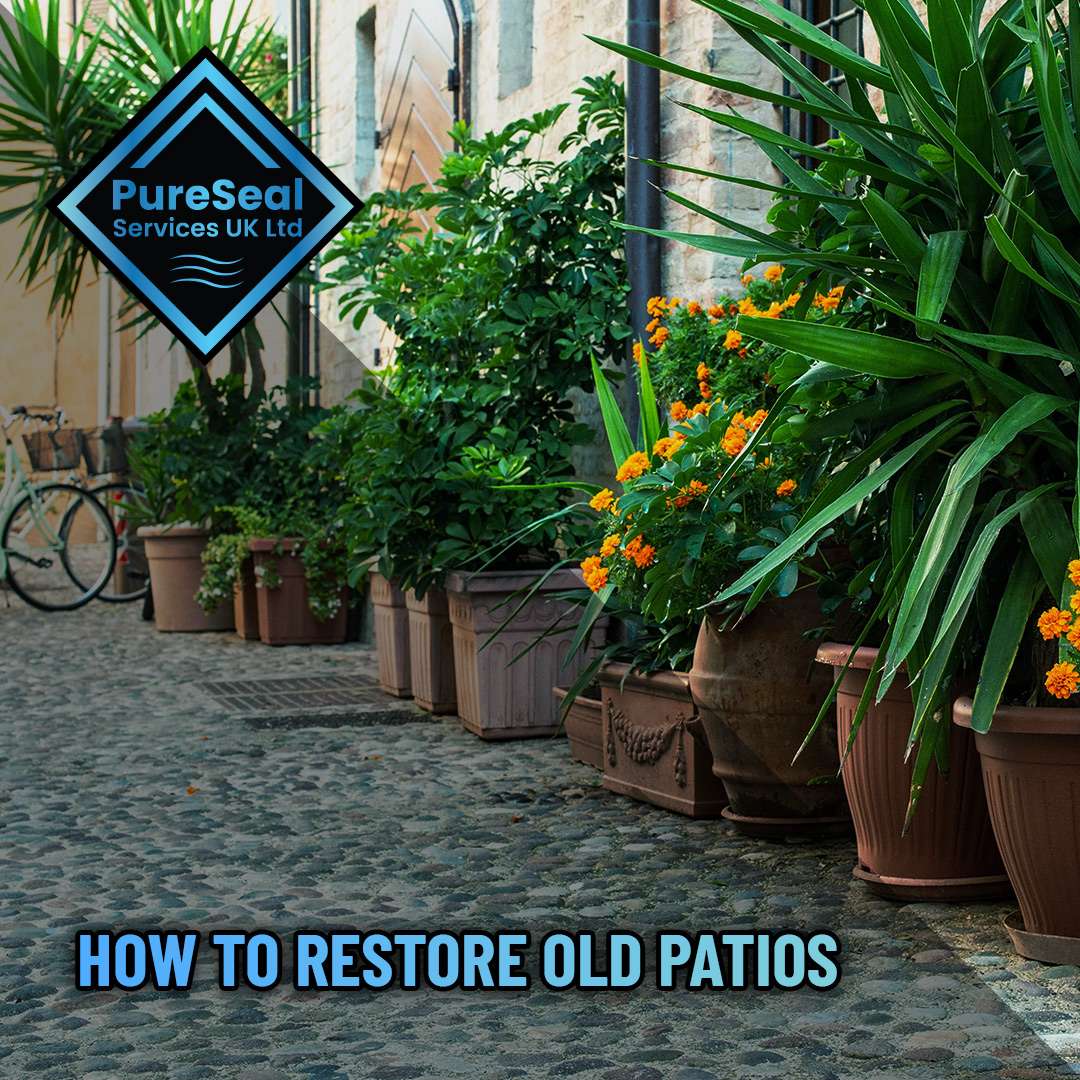
How to Restore Old Patios
An old patio can lose its appeal surprisingly quickly. What once looked clean, level and well-finished often becomes dull, stained, slippery or uneven over time. Weather exposure, foot traffic, organic growth and poor drainage all contribute to gradual deterioration.
Restoring a patio is not just about making it look better. It is about improving safety, extending lifespan and preventing ongoing damage to the surface beneath.
This guide explains how to properly restore old patios, covering cleaning, repairs, re-sanding where applicable, re-pointing, sealing and long-term maintenance.
Understanding Why Patios Deteriorate
Before restoring a patio, it is important to understand what causes it to degrade in the first place. Different materials behave differently, but most patios suffer from similar environmental pressures.
Common causes of patio damage
| Cause | Effect on patio |
|---|---|
| Weather exposure | Fading, cracking, erosion |
| Algae and moss growth | Slippery surface, dark staining |
| Freeze-thaw cycles | Cracking and surface lifting |
| Poor drainage | Water pooling and damp patches |
| Dirt build-up | Dull, unattractive finish |
| Joint failure | Loose slabs or uneven surface |
Most patios do not fail suddenly. They degrade slowly, which is why restoration can often bring them back to an excellent condition if done properly.
Types of Patio Surfaces and Restoration Needs
Different materials require different restoration approaches. A one-method approach does not work for all surfaces.
Common patio types
| Patio type | Characteristics | Restoration considerations |
|---|---|---|
| Natural stone | Sandstone, limestone, slate | Sensitive to harsh chemicals |
| Concrete slabs | Uniform and durable | Can handle higher pressure cleaning |
| Porcelain tiles | Non-porous and modern | Needs gentle cleaning, prone to scratching |
| Block paving patios | Jointed surface | Requires re-sanding after cleaning |
| Resin-bound surfaces | Smooth finish | Needs specialist cleaning only |
Each surface requires a tailored approach to avoid long-term damage.
Initial Patio Assessment Before Restoration
A proper restoration process always starts with inspection. This helps identify underlying issues rather than just surface-level problems.
What to check during inspection
- Cracked or broken slabs
- Loose or rocking sections
- Weed growth in joints or gaps
- Surface staining and discolouration
- Drainage flow and water pooling
- Joint condition (sand or mortar-based)
Patio condition grading
| Condition level | Description | Restoration requirement |
|---|---|---|
| Light wear | Minor dirt and fading | Basic clean and seal |
| Moderate wear | Moss, stains, minor joint issues | Deep clean and re-pointing |
| Heavy wear | Cracks, movement, algae build-up | Full restoration required |
| Severe damage | Structural movement or sinking | Re-laying sections needed |
Understanding the condition helps determine the correct restoration approach and cost level.
Cleaning Old Patios Safely
Cleaning is the foundation of any patio restoration. However, incorrect cleaning methods can cause permanent damage, especially on older or natural stone surfaces.
Safe cleaning methods
| Method | Best for | Risk level |
|---|---|---|
| Soft washing | Natural stone and porcelain | Low |
| Controlled pressure washing | Concrete and block paving | Medium |
| Manual scrubbing | Small or delicate areas | Low |
| Chemical treatment | Algae and staining | Depends on product |
The key principle is control rather than force.
Step-by-step cleaning process
Step 1: Dry removal of debris
- Sweep the entire patio thoroughly
- Remove leaves, soil and organic matter
- Clear drainage channels
- Check for loose material between slabs
This prevents dirt from being pushed deeper during washing.
Step 2: Targeted treatment for stains and algae
Different stains require different treatments.
| Issue | Treatment type |
|---|---|
| Algae and moss | Biocide treatment |
| Oil stains | Degreaser solution |
| Rust marks | Specialist rust remover |
| General dirt | Mild detergent wash |
Allow treatments to dwell before rinsing for best results.
Step 3: Controlled washing
- Use low to medium pressure only
- Avoid blasting joints or edges
- Work in consistent sections
- Rinse thoroughly to remove residue
High-pressure washing can damage pointing and loosen slabs, especially on older patios.
Re-Pointing and Joint Restoration
Many patios, particularly natural stone and block paving styles, rely on joint material to stay stable. When this fails, the surface becomes weak and uneven.
Types of patio jointing materials
| Material | Use case | Durability |
|---|---|---|
| Sand and cement mortar | Traditional stone patios | High |
| Resin jointing compounds | Modern installations | Very high |
| Kiln-dried sand | Block paving patios | Medium |
| Brush-in polymer sand | Flexible systems | High |
When re-pointing is needed
- Gaps appearing between slabs
- Loose or rocking paving stones
- Weed growth in joints
- Crumbling or missing mortar
- Water entering below surface layers
Re-pointing process overview
- Remove loose or failing joint material
- Clean joints thoroughly
- Allow surface to dry completely
- Apply new jointing material
- Compact or tool joints for proper fill
- Clean excess material from surface
Re-pointing is one of the most important steps in restoring structural integrity.
Repairing Damaged or Uneven Slabs
Over time, patio slabs can crack, sink or become uneven due to ground movement or poor installation.
Common slab issues
| Issue | Cause |
|---|---|
| Cracked slabs | Freeze-thaw damage or impact |
| Sunken areas | Sub-base failure |
| Raised edges | Root growth or ground movement |
| Loose slabs | Failed bedding material |
Repair process
- Lift affected slabs carefully
- Inspect and level sub-base
- Add or adjust bedding layer
- Re-seat slabs firmly
- Re-point or re-sand joints
Correct base preparation is essential to prevent repeat movement.
Dealing with Algae, Moss and Organic Growth
Organic growth is one of the most common issues on older patios, particularly in shaded or damp areas.
Why it grows
- Constant moisture retention
- Poor drainage
- Lack of sunlight
- Organic debris buildup
Treatment methods comparison
| Method | Effectiveness | Safety |
|---|---|---|
| Biocide application | High | Safe when used correctly |
| Pressure washing only | Medium | Can damage joints |
| Manual scraping | Low | Labour intensive |
| Combined treatment approach | Very high | Best option |
A combined treatment approach is often most effective for long-term results.
Patio Sealing and Surface Protection
Sealing is an important step in many patio restorations, particularly for porous materials like natural stone and concrete.
Benefits of sealing
- Reduces water absorption
- Slows algae and moss regrowth
- Enhances colour and finish
- Makes future cleaning easier
- Protects against staining
Types of patio sealers
| Sealer type | Finish | Protection level |
|---|---|---|
| Natural finish sealer | Matte appearance | Moderate |
| Colour-enhancing sealer | Deepens stone colour | High |
| Wet-look sealer | Glossy finish | Very high |
| Breathable sealer | Natural look with protection | High |
Sealing should always be applied to a fully clean and dry surface for best performance.
Cost of Patio Restoration in the UK
Patio restoration costs vary based on size, condition and level of work required. Heavily damaged patios require more labour, materials and time.
Typical pricing guide
| Service type | Price range | Notes |
|---|---|---|
| Basic clean only | £150 – £350 | Light dirt and algae removal |
| Clean and re-point | £400 – £900 | Moderate restoration |
| Full patio restoration | £800 – £2,000+ | Deep cleaning, repairs and sealing |
| Large or complex patios | £1,500 – £3,500+ | Premium restoration work |
Premium restoration services, such as those provided by Pureseal Services, sit at the higher end of the pricing scale due to detailed workmanship, specialist equipment and longer-lasting results.
Long-Term Maintenance After Restoration
Once a patio has been restored, maintenance is key to keeping it in good condition.
Recommended maintenance schedule
| Task | Frequency |
|---|---|
| Light sweeping | Weekly |
| Spot cleaning | As needed |
| Algae treatment | Every 3–6 months |
| Joint inspection | Twice per year |
| Full clean | Annually |
Regular maintenance prevents the need for repeat restoration work.
Common Restoration Mistakes to Avoid
Many patio restoration issues come from incorrect methods or rushing the process.
Frequent mistakes
| Mistake | Result |
|---|---|
| Overusing pressure washer | Surface erosion and joint damage |
| Skipping joint repair | Structural instability |
| Sealing dirty surfaces | Trapped staining and poor finish |
| Using wrong chemicals | Discolouration or surface damage |
| Ignoring drainage issues | Recurring damp problems |
Each stage of restoration builds on the previous one, so skipping steps often leads to poor long-term results.
Drainage and Water Management
Poor drainage is one of the main reasons patios deteriorate early.
Signs of drainage problems
- Standing water after rain
- Damp patches that never dry
- Algae forming in specific areas
- Soil erosion around edges
Improving patio drainage
| Solution | Benefit |
|---|---|
| Re-levelling surface | Encourages runoff |
| Installing drainage channels | Directs water away |
| Clearing existing drains | Prevents pooling |
| Adjusting joint integrity | Reduces water penetration |
Good drainage extends the lifespan of any restored patio.
Professional Patio Restoration Approach
While smaller patios can sometimes be maintained with DIY methods, full restoration work is often more effective when handled professionally.
A professional approach typically includes:
- Detailed surface assessment
- Controlled deep cleaning process
- Specialist stain and algae treatment
- Structural repairs where needed
- Re-pointing or re-sanding
- Application of protective sealers
- Final finishing for consistent appearance
Pureseal Services focus on high-end patio restoration work with attention to detail, particularly where long-term durability and appearance are priorities rather than quick surface-level improvements.
Advanced Patio Restoration Techniques for Long-Term Results
Once the basic cleaning, repairs and re-pointing have been completed, some patios still need additional restoration work to fully bring them back to a stable, long-lasting condition. This is especially true for older installations, natural stone patios, or areas that have suffered from years of neglect.
At this stage, the focus shifts from simply improving appearance to strengthening the structure and preventing future deterioration.
Deep Cleaning vs Surface Cleaning
Not all cleaning is the same. A light surface wash may improve appearance temporarily, but it does little to address embedded contamination within the stone or jointing.
Key differences
| Cleaning type | What it removes | Result longevity |
|---|---|---|
| Surface cleaning | Loose dirt and dust | Short-term improvement |
| Deep cleaning | Embedded algae, stains, oils | Long-term restoration |
| Restoration cleaning | Full contamination removal | Structural and visual reset |
Deep cleaning is particularly important for porous materials like sandstone or limestone, where contaminants can penetrate below the surface.
Steam Cleaning for Delicate Patio Surfaces
Steam cleaning is becoming more common in high-end patio restoration work, especially for natural stone.
Why steam cleaning is effective
- Uses high-temperature vapour rather than high pressure
- Breaks down organic growth without abrasion
- Reduces risk of surface erosion
- Works well on older, fragile stone
Suitable surfaces
| Surface type | Steam cleaning suitability |
|---|---|
| Sandstone | High |
| Limestone | High |
| Slate | Medium to high |
| Concrete | Medium |
| Porcelain | Medium (care required) |
Steam cleaning is particularly useful where traditional pressure washing would be too aggressive.
Advanced Stain Removal Techniques
Some stains require specialist treatment that goes beyond standard cleaning methods.
Deep stain categories
| Stain type | Difficulty | Treatment approach |
|---|---|---|
| Oil and grease | High | Degreasing + absorption treatment |
| Rust stains | Medium to high | Chemical rust removal |
| Organic tannin stains | High | Oxidising treatment |
| Paint spills | Very high | Mechanical and chemical removal |
Oil stain restoration method
Oil stains are one of the most stubborn issues in patio restoration.
- Apply specialist degreasing agent
- Allow extended dwell time for penetration
- Use absorbent compound where necessary
- Agitate gently with controlled brushing
- Rinse thoroughly and repeat if needed
In older stains, complete removal is not always possible, but significant improvement can usually be achieved.
Structural Re-Leveling of Patio Areas
Over time, patios can sink or become uneven due to soil movement, poor installation or water erosion. Simply cleaning these areas does not solve the underlying problem.
Causes of uneven patios
- Sub-base settlement
- Tree root movement
- Water erosion beneath slabs
- Poor original compaction
- Frost heave during winter
Re-levelling process
- Lift affected slabs carefully
- Inspect sub-base condition
- Add or compact new hardcore material
- Apply fresh bedding layer
- Re-lay slabs at correct level
- Re-point joints to secure position
Level variation comparison
| Condition | Surface effect | Action required |
|---|---|---|
| Minor dips | Slight pooling water | Spot correction |
| Moderate sinking | Trip hazards | Local re-levelling |
| Severe movement | Widespread unevenness | Full section rebuild |
Re-levelling is one of the most important structural restoration steps for long-term patio stability.
Joint Reinforcement Options for Patios
Once a patio has been cleaned and re-pointed, reinforcing the joints can significantly extend its lifespan.
Joint reinforcement methods
| Method | Description | Durability |
|---|---|---|
| Cement-based pointing | Traditional rigid joints | High but prone to cracking |
| Resin jointing | Flexible, durable compound | Very high |
| Polymeric sand (for block paving patios) | Sets when activated | High |
| Hybrid mortar systems | Flexible cement blends | High |
Why reinforcement matters
- Reduces weed regrowth
- Improves resistance to water penetration
- Helps maintain slab alignment
- Extends time between maintenance cycles
In premium restoration work, joint reinforcement is often tailored to the specific patio material and exposure conditions.
Colour Restoration for Faded Patios
Many older patios suffer from colour fading, particularly natural stone exposed to years of sunlight and weathering.
Causes of fading
- UV exposure
- Acid rain erosion
- Chemical cleaning overuse
- Natural mineral breakdown
Colour enhancement methods
| Method | Effect | Longevity |
|---|---|---|
| Colour-enhancing sealers | Deepens natural tones | Medium to long |
| Stone colour revivers | Temporary enhancement | Short to medium |
| Full sealing systems | Protects and enhances | Long term |
Colour restoration does not change the material, but it restores visual depth and improves uniformity across the surface.
Anti-Slip Treatment for Safety Improvement
Old patios often become slippery due to algae, polished surfaces or worn finishes. This can present a safety risk, particularly in wet weather.
Anti-slip improvement methods
- Deep cleaning to remove surface biofilm
- Application of anti-slip sealers
- Surface texturing treatments on concrete
- Biocide maintenance to prevent regrowth
Slip risk comparison
| Surface condition | Slip risk level |
|---|---|
| Clean dry patio | Low |
| Light algae presence | Medium |
| Heavy moss growth | High |
| Wet sealed surface (gloss finish) | Medium to high |
Anti-slip treatments are often recommended in shaded gardens or areas that do not dry quickly.
Edge Restraint Repairs for Patio Stability
Just like block paving, patio edges play a key role in keeping the structure stable.
Common edge problems
- Slabs spreading outward
- Loose perimeter stones
- Soil washout around edges
- Broken or missing edging material
Repair approaches
| Edge type | Repair method |
|---|---|
| Concrete edging | Recasting or patch repair |
| Stone kerbing | Resetting and re-bedding |
| Resin edging | Reapplication or reinforcement |
| Natural edge finish | Soil stabilisation and re-compaction |
Edge stability directly affects how long a restored patio will remain level and secure.
Weather Protection Strategies After Restoration
Once a patio has been restored, protecting it from future weather damage is essential.
Seasonal protection considerations
| Season | Risk factor | Preventative action |
|---|---|---|
| Winter | Freeze-thaw cracking | Sealing and drainage checks |
| Spring | Weed growth | Early biocide treatment |
| Summer | UV fading | Sealing and shade management |
| Autumn | Leaf staining | Regular sweeping and clearing |
Water protection benefits
- Reduces absorption into porous stone
- Slows erosion of joint materials
- Prevents staining from organic debris
- Helps maintain consistent surface appearance
Water protection is one of the most important long-term investments in patio maintenance.
Equipment Differences in High-End Restoration Work
The quality of restoration work is heavily influenced by the equipment used. Professional-grade tools allow for more precise, controlled and consistent results.
Equipment comparison
| Task | Domestic equipment | Professional equipment |
|---|---|---|
| Cleaning | Standard pressure washer | Adjustable flow systems |
| Joint repair | Manual trowels | Precision jointing tools |
| Surface drying | Natural air drying | Forced air systems |
| Stain removal | Household chemicals | Specialist restoration compounds |
| Sealing | Basic applicators | Controlled spray or roller systems |
Pureseal Services operate with higher-end restoration systems that allow for more controlled cleaning and finishing, particularly on delicate or high-value patio surfaces.
Long-Term Restoration Planning
A properly restored patio should not require constant major intervention if maintained correctly. Instead, it should follow a predictable maintenance cycle.
Suggested long-term schedule
| Timeframe | Action |
|---|---|
| Monthly | Light cleaning and inspection |
| Every 3 months | Algae and moss treatment |
| Every 6–12 months | Deep clean touch-up |
| Every 2–4 years | Re-sealing or re-pointing check |
| As needed | Structural repairs |
Common Long-Term Problems After Poor Restoration Work
If restoration is done incorrectly or incomplete, problems often return quickly.
Typical failure points
| Issue | Cause |
|---|---|
| Rapid algae return | No biocide treatment used |
| Loose slabs | Poor re-bedding or sub-base issues |
| Patchy appearance | Uneven cleaning or sealing |
| Water pooling | Incorrect levelling |
| Joint breakdown | Low-quality pointing materials |
This is why full-process restoration is important rather than isolated cleaning steps.
Professional Restoration Approach Overview
High-quality patio restoration is not just a cleaning service. It is a structured process designed to rebuild appearance, stability and longevity at the same time.
A full professional restoration approach typically includes:
- Full inspection and condition grading
- Deep or steam cleaning depending on surface type
- Targeted stain and algae removal
- Structural repairs and slab re-levelling
- Re-pointing with appropriate jointing materials
- Optional colour enhancement and sealing
- Final finishing and surface balancing
Pureseal Services focus on detailed, high-end restoration work that prioritises long-term performance and finish quality rather than quick cosmetic improvement.
Final restoration overview and long-term takeaways
Restoring an old patio is rarely a single-step job. It is a process that builds in layers, starting with cleaning and ending with structural and surface protection work that determines how well the patio holds up over time. When each stage is carried out properly, even heavily weathered patios can be brought back to a condition that looks clean, stable and well-finished.
The most important thing to understand is that appearance and structure go hand in hand. A patio can look improved after a basic wash, but if the joints are weak, the slabs are uneven, or drainage is poor, the problems will return quickly. That is why proper restoration always goes deeper than surface cleaning alone.
What makes a restoration successful long term
A well-restored patio typically shares a few key characteristics:
- The surface is fully cleaned without damaging the material
- Organic growth has been properly treated at root level
- Jointing or pointing is structurally sound and evenly applied
- Slabs are stable with no rocking or movement
- Water drains away naturally without pooling
- The surface has been protected where appropriate
When all of these elements are addressed together, the result is not just cosmetic improvement but a properly functioning outdoor surface.
The importance of doing the job in the right order
One of the most common reasons patio restorations fail early is incorrect sequencing. Each stage depends on the one before it being completed properly.
For example:
- Re-pointing before a full clean traps dirt and weakens adhesion
- Sealing before full drying locks in moisture and stains
- Skipping sub-base checks leads to recurring movement issues
- Over-washing before joint repair causes further structural loss
A structured approach avoids these problems and ensures each layer of the patio supports the next.
Long-term performance expectations
Once restored correctly, a patio should not require constant heavy work. Instead, it should move into a maintenance phase where light care keeps it in good condition.
Typical long-term expectations include:
- Cleaner appearance for longer periods between washes
- Reduced weed and moss growth in joints
- Improved resistance to staining and water absorption
- More stable surface under foot traffic
- Slower deterioration from weather exposure
This is where the real value of restoration shows, as ongoing upkeep becomes simpler and less frequent.
Ongoing care mindset
A restored patio still lives outdoors, so it will always be exposed to the same environmental pressures. The difference is that it starts from a stronger, more stable position.
Simple habits make a noticeable difference over time:
- Keeping the surface clear of leaves and debris
- Addressing small stains quickly before they set
- Checking joints and edges periodically
- Managing drainage so water does not sit for long periods
- Treating early signs of algae before they spread
These small actions reduce the need for repeat deep restoration work.
Where professional restoration fits in
While smaller patios can sometimes be maintained with basic cleaning, full restoration work is more complex when structural issues, heavy staining or long-term neglect are involved. At that point, precision and equipment make a significant difference to the outcome.
High-end restoration services such as those provided by Pureseal Services focus on a complete process rather than isolated fixes. That includes controlled deep cleaning, careful joint restoration, surface protection where appropriate, and attention to drainage and stability issues that are often missed in basic cleaning approaches.
This level of work tends to sit at the higher end of the pricing scale, reflecting the time, care and equipment involved, but it is also what helps achieve longer-lasting and more consistent results across the entire patio rather than just improving isolated areas.
What a properly restored patio should feel like in use
Beyond appearance, there is a noticeable difference in how a restored patio performs day to day. The surface should feel firm underfoot, consistent across its entire area and free from movement or instability. Water should behave predictably, running off rather than sitting in patches. Joints should be tight enough to resist weed growth while still allowing the structure to breathe naturally.
When all of this comes together, the patio becomes a more usable and reliable part of the outdoor space rather than an ongoing maintenance problem.