


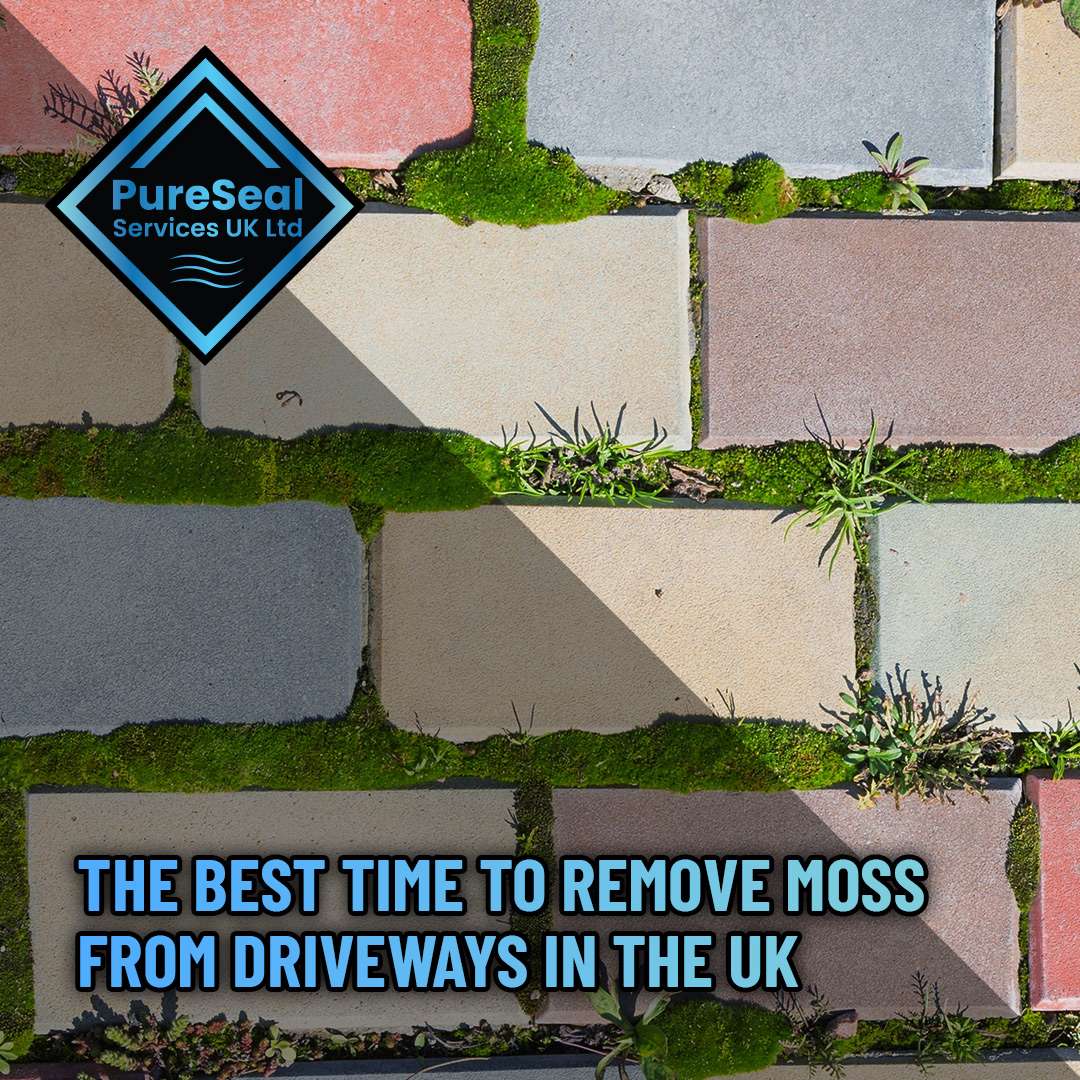
The Best Time to Remove Moss From Driveways in the UK
A driveway is often one of the first things visitors notice when approaching a property. Whether constructed from block paving, concrete, tarmac, resin, or natural stone, a clean and well-maintained driveway helps create a positive first impression. However, the UK’s damp climate provides ideal conditions for moss growth, making driveway maintenance an ongoing challenge for many homeowners and commercial property owners.
Moss may appear harmless at first, but it can quickly spread across driveway surfaces, trapping moisture, creating slippery conditions, and affecting the overall appearance of a property. Understanding the best time to remove moss from driveways in the UK can help prevent costly repairs and maintain a safer outdoor environment throughout the year.
Professional driveway cleaning and moss removal carried out by Pure Seal Services ensures effective treatment and long-lasting results while protecting the integrity of the driveway surface.
Why Moss Grows on UK Driveways
The UK experiences relatively high rainfall and humidity levels throughout much of the year. Combined with shaded areas and limited airflow, these conditions create the perfect environment for moss to thrive.
Common factors that encourage moss growth include:
| Factor | Impact on Moss Growth |
|---|---|
| Frequent rainfall | Provides continuous moisture |
| North-facing driveways | Reduced sunlight exposure |
| Overhanging trees | Creates shade and traps moisture |
| Poor drainage | Allows water to sit on surfaces |
| Nearby vegetation | Increases humidity levels |
| Porous surfaces | Retains moisture and organic matter |
Even newer driveways can develop moss if environmental conditions are favourable.
Problems Caused by Driveway Moss
Many property owners delay moss removal because the issue appears cosmetic. In reality, moss can cause a variety of practical and safety concerns.
Increased Slip Hazards
One of the biggest risks associated with moss is the slippery surface it creates. When wet, moss becomes particularly hazardous, especially during autumn and winter months.
This can increase the likelihood of:
- Slips and falls
- Vehicle tyre slippage
- Difficulty walking on inclined driveways
- Increased liability risks for commercial properties
Surface Damage
Moss retains moisture against the driveway surface. Over time, this can contribute to:
- Surface erosion
- Joint deterioration
- Weed growth
- Freeze-thaw damage during winter
- Staining and discolouration
Reduced Kerb Appeal
A moss-covered driveway can make an otherwise attractive property appear neglected. For homeowners considering selling their property, driveway appearance can influence prospective buyers’ first impressions.
Understanding Moss Growth Through the Seasons
To determine the best time for moss removal, it helps to understand how moss behaves throughout the year.
| Season | Moss Activity | Recommended Action |
|---|---|---|
| Spring | Rapid growth begins | Excellent time for removal |
| Summer | Slower growth in dry periods | Good maintenance window |
| Autumn | Peak growth due to moisture | Highly recommended |
| Winter | Growth slows but remains active | Limited treatment opportunities |
Although moss can grow throughout the year, certain seasons offer more favourable conditions for removal and preventative treatment.
Spring: One of the Best Times for Moss Removal
Spring is widely considered one of the most effective times to remove moss from driveways.
Following winter, many driveways emerge with significant moss build-up due to months of damp weather and limited sunlight.
Benefits of Spring Moss Removal
Removal of Winter Growth
Winter often leaves driveways heavily affected by moss, algae, and organic debris.
Spring cleaning allows property owners to:
- Remove accumulated growth
- Restore driveway appearance
- Improve safety before outdoor activity increases
Better Weather Conditions
Spring temperatures are generally mild enough to support effective cleaning and treatment processes.
Benefits include:
| Spring Advantage | Reason |
|---|---|
| Moderate temperatures | Treatments perform effectively |
| Lower risk of frost | Reduces treatment disruption |
| Increasing daylight | Helps surfaces dry faster |
| Reduced rainfall compared with winter | Improves cleaning efficiency |
Preparation for Summer
Removing moss in spring helps ensure the driveway remains clean and presentable during the summer months when outdoor spaces are used more frequently.
Summer Moss Removal
Many people assume summer is the ideal season for driveway cleaning. While it offers several advantages, it is not always the most effective period for tackling heavy moss infestations.
Advantages of Summer Cleaning
Summer generally provides:
- Longer daylight hours
- Faster drying times
- More predictable weather
- Easier scheduling of cleaning work
These conditions can improve the overall efficiency of driveway cleaning projects.
Potential Limitations
Extended dry periods may cause moss to become harder and more firmly attached to surfaces.
In some cases:
- Moss may require more intensive cleaning
- Treatment products may evaporate too quickly
- Water restrictions can occasionally affect cleaning methods
Despite these considerations, summer remains an excellent time for routine maintenance and preventative treatments.
Autumn: Another Prime Time for Moss Removal
Autumn is often regarded as the second-best season for moss removal in the UK.
As temperatures begin to cool and rainfall increases, moss growth accelerates rapidly.
Why Autumn Treatment Matters
Many property owners wait until spring to address moss problems. However, removing moss in autumn can prevent substantial winter growth.
Benefits include:
| Autumn Benefit | Explanation |
|---|---|
| Prevents winter spread | Reduces growth before wet months |
| Improves winter safety | Minimises slippery surfaces |
| Protects driveway joints | Less moisture retention |
| Maintains appearance | Keeps driveway looking tidy year-round |
Leaf Build-Up and Moss Growth
Autumn leaves often contribute to moss problems.
As leaves decompose, they create organic material that:
- Retains moisture
- Blocks sunlight
- Encourages moss establishment
Professional cleaning removes both moss and organic debris before winter arrives.
Winter Moss Removal Considerations
Winter is generally the least favourable time for driveway moss removal.
The combination of:
- Heavy rainfall
- Frost
- Snow
- Short daylight hours
can make cleaning more challenging.
When Winter Cleaning May Be Necessary
There are situations where winter moss removal is justified.
These include:
- Severe slip hazards
- Commercial property safety concerns
- Preparing a property for sale
- Emergency maintenance requirements
Professional contractors can often complete work safely during suitable weather windows.
The Importance of Early Intervention
The longer moss remains on a driveway, the more difficult it can become to remove completely.
Early treatment offers several benefits:
| Benefit | Description |
|---|---|
| Easier removal | Less established growth |
| Lower maintenance costs | Prevents extensive cleaning requirements |
| Reduced damage risk | Less moisture retention |
| Improved appearance | Cleaner surfaces year-round |
Regular inspections can help identify moss growth before it becomes a significant problem.
Different Driveway Types and Moss Removal Timing
Not all driveway materials respond in the same way to moss growth.
Block Paving
Block paving is particularly susceptible because joints can trap moisture and organic debris.
Recommended treatment periods:
- Spring
- Early autumn
Regular maintenance helps preserve jointing sand and surface stability.
Concrete Driveways
Concrete surfaces often develop moss in shaded or poorly drained areas.
Benefits of seasonal cleaning include:
- Reduced staining
- Improved appearance
- Prevention of surface degradation
Tarmac Driveways
Tarmac can become extremely slippery when moss develops.
Prompt removal is important because prolonged moisture retention may accelerate wear.
Resin Bound Driveways
Resin surfaces are generally resistant to weed and moss growth but still benefit from routine maintenance.
Seasonal cleaning helps preserve:
- Colour consistency
- Surface permeability
- Overall appearance
Signs Your Driveway Needs Moss Removal
Many property owners wonder whether they should wait until spring or address moss sooner.
Several warning signs indicate that action should be taken immediately.
Visible Green Patches
The most obvious indicator is the appearance of green areas across the surface.
Slippery Surface Conditions
If the driveway feels slippery after rain, moss may already be creating a safety hazard.
Dark Damp Areas
Persistent damp patches often signal developing moss colonies.
Weed Growth
Moss and weeds frequently develop together, particularly on block paving.
Professional Moss Removal Versus DIY Cleaning
While some homeowners attempt to remove moss themselves, professional treatment often provides superior results.
DIY Challenges
Common difficulties include:
| DIY Issue | Potential Consequence |
|---|---|
| Incomplete moss removal | Rapid regrowth |
| Surface damage | Pressure washing errors |
| Lack of treatment products | Reduced effectiveness |
| Safety risks | Slips and falls |
Professional Advantages
Professional services offer:
- Specialist equipment
- Appropriate cleaning methods
- Surface-specific treatments
- Long-term preventative solutions
The team at Pure Seal Services assesses each driveway individually to ensure the most suitable cleaning and moss removal approach.
Typical Moss Removal Costs in the UK
Driveway cleaning costs vary depending on:
- Driveway size
- Surface material
- Moss severity
- Accessibility
- Additional treatments required
Premium professional services focus on delivering lasting results rather than competing solely on price.
| Driveway Size | Typical Professional Moss Removal Cost |
|---|---|
| Small driveway | £180 – £300+ |
| Medium driveway | £300 – £600+ |
| Large driveway | £600 – £1,200+ |
| Extensive commercial areas | Quotation required |
Higher-quality services generally invest more heavily in professional equipment, specialist treatments, insurance, training, and aftercare, resulting in a superior finish and improved long-term value.
How Often Should Moss Be Removed?
The frequency of moss removal depends on environmental conditions.
Low-Risk Properties
Driveways with:
- Good sunlight exposure
- Effective drainage
- Limited surrounding vegetation
may only require professional treatment every few years.
High-Risk Properties
Properties with:
- Heavy shade
- Nearby trees
- Persistent dampness
- North-facing aspects
often benefit from annual inspections and maintenance.
Preventing Moss Regrowth After Cleaning
Removing moss is only part of the solution. Preventative maintenance helps keep driveways cleaner for longer.
Recommended measures include:
| Preventative Action | Benefit |
|---|---|
| Regular sweeping | Removes organic debris |
| Gutter maintenance | Reduces water overflow |
| Tree pruning | Increases sunlight exposure |
| Drainage improvements | Prevents standing water |
| Professional treatments | Inhibits future growth |
Professional aftercare treatments provided by Pure Seal Services can significantly reduce the speed at which moss returns.
Choosing the Right Time to Book Professional Moss Removal
Demand for driveway cleaning often increases significantly during spring and autumn.
Booking in advance can help secure preferred appointment dates and ensure treatment takes place during optimal weather conditions.
Property owners should consider scheduling moss removal:
- Early spring before peak outdoor season
- Early autumn before winter weather arrives
- Immediately if safety concerns develop
- Following prolonged periods of wet weather
By acting proactively, homeowners can protect their driveway investment while maintaining a cleaner, safer, and more attractive exterior throughout the year.
How Weather Conditions Affect Moss Removal Results
While the season plays an important role in determining the best time to remove moss from a driveway, day-to-day weather conditions can be equally important. Professional driveway cleaning companies carefully monitor forecasts before carrying out moss removal treatments to ensure the best possible results.
Rainfall Considerations
Light rainfall is common throughout the UK, but excessive rain immediately before or after treatment can reduce effectiveness.
Heavy rain can:
- Saturate moss and debris
- Slow drying times
- Wash away treatment products before they fully activate
- Delay cleaning schedules
For this reason, many professional treatments are scheduled during periods of relatively settled weather whenever possible.
Temperature Considerations
Temperature influences both moss growth and treatment performance.
| Temperature Range | Impact on Moss Removal |
|---|---|
| Below 5°C | Treatments may work more slowly |
| 5°C–15°C | Ideal operating conditions |
| 15°C–25°C | Effective cleaning and drying |
| Above 25°C | Treatments may dry too quickly |
The moderate temperatures typically experienced during spring and autumn often create ideal conditions for achieving long-lasting results.
Why Shaded Driveways Require More Frequent Attention
Not all driveways experience moss growth at the same rate. A driveway positioned in full sunlight will generally remain cleaner for longer than one located beneath trees or beside high boundary walls.
Shaded driveways frequently experience:
- Reduced evaporation
- Persistent dampness
- Lower surface temperatures
- Increased organic debris accumulation
These conditions create an ideal environment for moss establishment.
Common Problem Areas
Homeowners should pay particular attention to:
- Areas beneath parked vehicles
- Sections beneath overhanging trees
- North-facing edges of driveways
- Areas close to garden borders
- Locations with poor drainage
Targeting these sections early can help prevent widespread infestation across the entire driveway surface.
The Relationship Between Moss, Algae and Lichen
Many people use the term “moss” to describe all green growth found on driveways, but several different organisms may be present.
Moss
Moss forms dense green cushions and thrives in consistently damp conditions.
Algae
Algae often appear as green or black staining across the surface and can create extremely slippery conditions when wet.
Lichen
Lichen typically appears as crusty patches in shades of grey, green, yellow, or white. It can be particularly stubborn and may require specialist treatment to remove effectively.
| Growth Type | Appearance | Risk Level |
|---|---|---|
| Moss | Thick green clumps | High slip risk |
| Algae | Green or black film | Very high slip risk |
| Lichen | Crusty coloured patches | Surface staining risk |
A professional assessment helps identify the exact type of growth affecting a driveway and ensures the most appropriate cleaning method is selected.
Benefits of Maintaining a Moss-Free Driveway
Regular moss removal offers more than simply aesthetic improvements.
Enhanced Property Appearance
A clean driveway helps improve the overall presentation of a property. Because driveways occupy a significant portion of many front gardens, their condition can have a noticeable impact on kerb appeal.
Improved Safety
Reducing slippery growth helps create safer walking and driving surfaces for:
- Residents
- Visitors
- Delivery drivers
- Customers
- Employees
Extended Surface Lifespan
By preventing moisture retention and biological growth, regular maintenance can help prolong the lifespan of driveway materials.
Reduced Future Cleaning Costs
Routine maintenance often prevents the need for extensive restorative cleaning later.
| Maintenance Approach | Long-Term Outcome |
|---|---|
| Regular moss removal | Lower repair costs |
| Occasional maintenance | Moderate upkeep requirements |
| Neglected driveway | Greater restoration costs |
Professional moss removal carried out at the right time of year helps preserve the appearance, safety, and structural condition of driveways across all property types, ensuring surfaces remain attractive and functional throughout the changing UK seasons.