


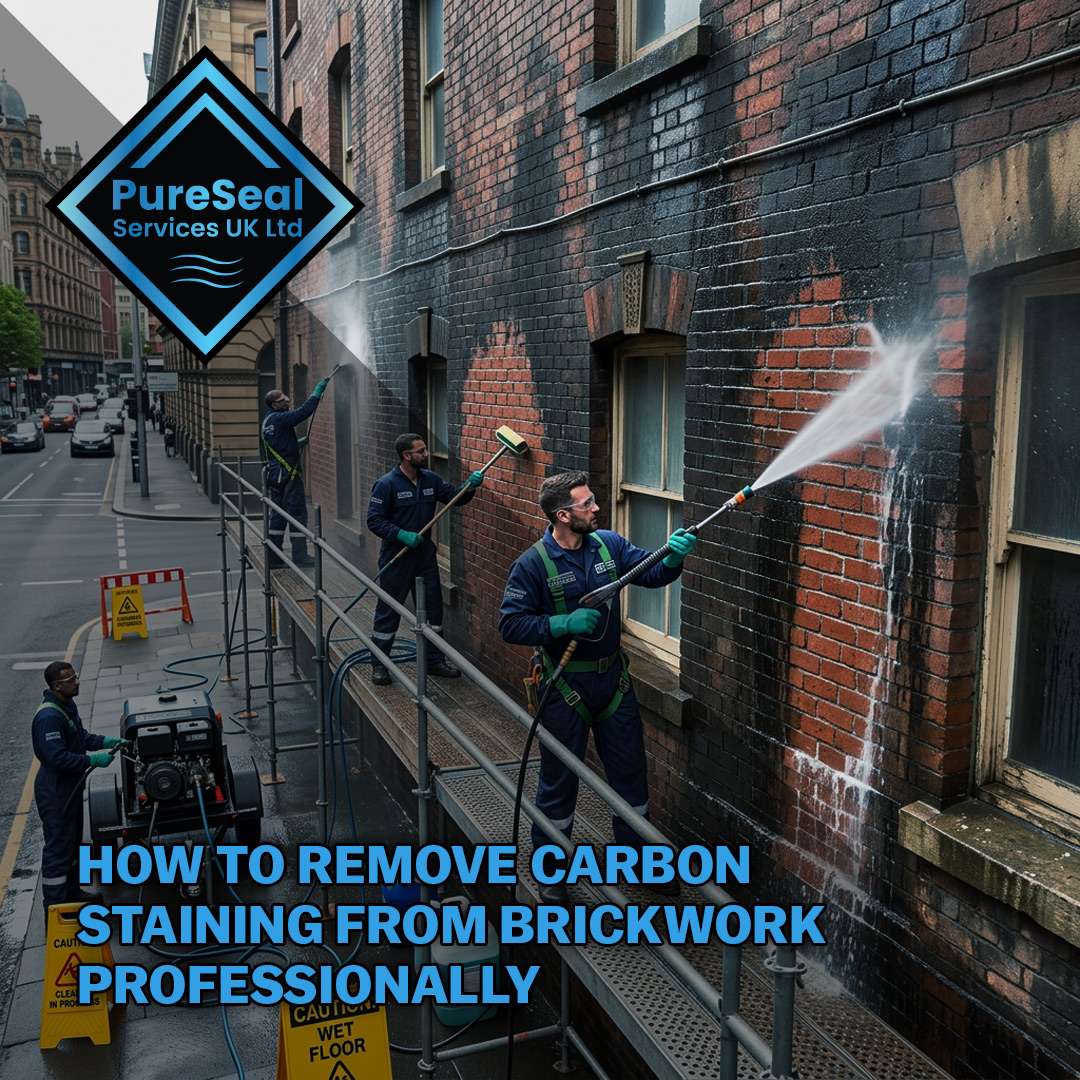
How to Remove Carbon Staining From Brickwork Professionally
Carbon staining is one of the most stubborn forms of discolouration found on brickwork. Whether it has been caused by fire damage, chimney emissions, vehicle exhaust fumes, industrial pollution or years of exposure to soot, these black stains can leave buildings looking neglected and aged.
Unlike surface dirt, carbon particles often penetrate deep into the pores of masonry, making them difficult to remove using standard cleaning methods. Attempting to clean them without the correct products or techniques can permanently damage bricks, mortar joints and surrounding materials.
At Pure Seal Services, we specialise in professional exterior surface restoration using carefully selected cleaning systems designed to remove even the most difficult carbon staining while protecting the integrity of the brickwork.
What Is Carbon Staining?
Carbon staining is the build-up of microscopic carbon particles that become embedded within the surface of brickwork. Over time these deposits create dark grey or black marks which can become increasingly difficult to remove.
Common sources include:
| Source | Typical Appearance |
|---|---|
| Chimney smoke | Black staining above fireplaces and chimneys |
| Fire damage | Heavy soot deposits across brick surfaces |
| Vehicle exhaust | Dark staining near roads and car parks |
| Industrial pollution | Widespread black discolouration |
| BBQ smoke | Localised black patches |
| Wood burners | Soot staining around flues |
| Boiler flues | Vertical black streaks |
| Factory emissions | Deep embedded carbon deposits |
The longer these stains remain untreated, the more deeply they penetrate into porous brickwork.
Why Carbon Stains Are So Difficult to Remove
Many homeowners assume black marks can simply be pressure washed away.
Unfortunately, carbon deposits behave differently from ordinary dirt.
Carbon particles:
- Penetrate into microscopic pores
- Bond to mineral surfaces
- Resist ordinary detergents
- Become compacted by weather
- Can react with pollutants to form stubborn deposits
This means simple washing usually removes only loose dirt while leaving the actual staining behind.
Common Areas Where Carbon Staining Appears
Professional cleaning is often required on:
- Victorian brick buildings
- Listed properties
- Chimney breasts
- Fireplace surrounds
- Commercial buildings
- Industrial premises
- Boundary walls
- Garage walls
- Apartment blocks
- Historic brickwork
Older buildings often suffer the worst staining because decades of pollution have accumulated within the masonry.
Identifying Carbon Staining
Not every black mark is carbon.
Professional inspection helps determine the exact cause before treatment begins.
| Stain Type | Appearance | Professional Treatment |
|---|---|---|
| Carbon staining | Matt black deposits | Specialist chemical cleaning |
| Algae | Green or black biological growth | Biocide treatment |
| Mould | Patchy dark growth | Biological removal |
| Bitumen | Glossy black coating | Solvent removal |
| Smoke damage | Thick soot deposits | Multi-stage restoration |
| Oil staining | Dark greasy patches | Degreasing treatment |
Correct identification prevents unnecessary damage from using unsuitable chemicals.
Why DIY Cleaning Usually Fails
Many DIY methods appear attractive because they promise quick results.
Common attempts include:
- Pressure washing
- Household bleach
- Acid cleaners
- Wire brushing
- Steam cleaning
- Abrasive pads
These approaches often create additional problems.
Pressure Washing
High pressure may remove loose deposits but frequently drives carbon further into porous bricks while risking erosion of mortar joints.
Wire Brushes
Metal brushes scratch the surface, leaving permanent damage that becomes more noticeable after cleaning.
Household Chemicals
General-purpose cleaners lack the strength needed to dissolve carbon deposits.
Brick Acid
Strong brick acids can permanently etch the surface, especially on older handmade bricks.
The Professional Carbon Removal Process
Professional cleaning follows a carefully controlled process to maximise stain removal while protecting the masonry.
| Stage | Purpose |
|---|---|
| Inspection | Identify brick type and staining |
| Testing | Trial cleaning on a discreet area |
| Surface preparation | Remove loose contamination |
| Chemical application | Break down carbon deposits |
| Controlled agitation | Lift embedded particles |
| Low-pressure rinsing | Remove residues safely |
| Repeat treatment if required | Deep stain removal |
| Final inspection | Check consistency across the wall |
Each building requires its own treatment plan depending on age, brick type and severity of staining.
Why Brick Type Matters
Different bricks react differently to cleaning chemicals.
Professional assessment ensures the safest approach.
| Brick Type | Cleaning Considerations |
|---|---|
| Handmade bricks | Extremely delicate |
| Engineering bricks | Highly durable |
| Facing bricks | Moderate chemical resistance |
| Soft red bricks | Require gentle treatment |
| Historic bricks | Specialist restoration methods |
| Reclaimed bricks | Variable composition |
Using one cleaning method on every brick type is rarely appropriate.
Fire Damage Carbon Removal
Fire damage creates some of the most severe carbon staining.
Soot particles become deeply embedded following exposure to extreme heat.
Professional restoration often includes:
- Soot removal
- Carbon stain removal
- Smoke residue treatment
- Odour reduction
- Surface neutralisation
- Multiple cleaning stages
The sooner restoration begins after fire damage, the greater the likelihood of successful stain removal.
Chimney Staining
One of the most common causes of carbon staining is chimney use.
Over many years, smoke particles settle on surrounding brickwork.
Professional cleaning can restore:
- Chimney stacks
- Fireplace surrounds
- External chimney breasts
- Brick garden walls
- Roof-level masonry
Removing these stains improves both appearance and long-term maintenance.
Commercial Buildings
Commercial properties frequently suffer carbon staining due to traffic and pollution.
Common examples include:
- Retail premises
- Office buildings
- Hotels
- Warehouses
- Schools
- Hospitals
- Apartment developments
Professional restoration helps maintain a clean appearance that reflects positively on the property.
Can Carbon Staining Be Completely Removed?
Results depend upon several factors.
| Factor | Effect on Results |
|---|---|
| Age of staining | Older stains are harder to remove |
| Brick porosity | Softer bricks absorb more carbon |
| Previous cleaning attempts | Damage may limit restoration |
| Fire intensity | Heavy soot may penetrate deeply |
| Weather exposure | Long-term staining becomes embedded |
| Brick condition | Damaged masonry may retain some marks |
Most staining can be dramatically reduced, although extremely old or severe deposits may require multiple treatments.
Why Pressure Washing Alone Isn’t Enough
Pressure washing remains one of the biggest misconceptions in brick cleaning.
While it can improve appearance temporarily, it rarely removes embedded carbon.
Instead it often:
- Leaves shadow staining
- Damages pointing
- Saturates walls
- Causes patchy cleaning
- Increases future maintenance
Professional chemical cleaning targets the staining itself rather than simply washing the surface.
The Importance of Test Panels
Experienced contractors rarely begin full cleaning immediately.
Instead they perform a trial area.
Benefits include:
- Confirming the correct chemical strength
- Assessing brick reaction
- Predicting final appearance
- Avoiding unnecessary damage
- Providing realistic expectations
This careful approach helps achieve consistent results across the whole property.
Health and Safety During Cleaning
Professional cleaning involves specialist chemicals that require proper handling.
Safe working practices include:
- Risk assessments
- Appropriate PPE
- Controlled chemical application
- Surface protection
- Environmental management
- Safe waste disposal
This is particularly important around occupied buildings, public spaces and sensitive landscaping.
Typical Cost of Professional Carbon Stain Removal
Every project is individually assessed because no two buildings are the same.
Factors affecting price include:
| Pricing Factor | Impact on Cost |
|---|---|
| Property size | Larger elevations require more labour |
| Severity of staining | Heavy carbon takes longer to remove |
| Building height | Additional access equipment may be required |
| Brick type | Delicate bricks require slower cleaning |
| Access restrictions | Difficult access increases project time |
| Previous damage | Restoration work may be needed |
Professional carbon removal is a specialist restoration service rather than a basic exterior clean. Premium equipment, experienced technicians, specialist cleaning products and thorough testing all contribute to a higher overall investment. While this means the initial cost is typically higher than standard brick cleaning, it helps deliver safer, more consistent and longer-lasting results for valuable properties.
Why Choose Professional Brick Restoration?
Professional carbon removal offers significant advantages over DIY methods.
| DIY Cleaning | Professional Restoration |
|---|---|
| Limited stain removal | Deep carbon removal |
| Risk of permanent damage | Carefully tested methods |
| Generic products | Specialist restoration chemicals |
| No brick assessment | Material-specific treatment |
| Uneven appearance | Consistent finish |
| Potential mortar damage | Controlled cleaning techniques |
At Pure Seal Services, every project begins with a detailed assessment of the brickwork, ensuring the most suitable cleaning method is selected for the specific type of masonry and level of carbon staining. This careful approach helps restore the appearance of brickwork while protecting the structure and preserving the character of the property.
How Weather Affects Carbon Staining
Weather plays a major role in both the formation and removal of carbon staining. Moisture allows soot and airborne pollutants to adhere more easily to brickwork, while repeated wet and dry cycles gradually draw the particles deeper into the surface.
Environmental factors that contribute to carbon staining include:
| Weather Condition | Impact on Brickwork |
|---|---|
| Heavy rainfall | Carries airborne pollutants onto walls |
| Damp conditions | Encourages contaminants to penetrate pores |
| Strong winds | Deposits soot and pollution onto exposed elevations |
| Frost | Opens microscopic pores in ageing brickwork |
| High humidity | Slows the natural drying of contaminated surfaces |
Properties located near busy roads, industrial estates or areas where wood-burning stoves are common often develop staining more quickly than rural buildings.
The Difference Between Surface Dirt and Embedded Carbon
Many buildings appear dirty from a distance, but professional inspection often reveals several different types of contamination.
Surface dirt generally sits on top of the brick and is relatively straightforward to remove.
Carbon staining behaves differently because it becomes embedded within the masonry itself.
Characteristics of embedded carbon include:
- Black or dark grey colouring that remains after washing
- Uneven patches around chimneys or flues
- Vertical streaking below vents
- Persistent dark areas on sheltered walls
- Staining that returns visually after the wall dries
Recognising this difference is essential when selecting the correct cleaning process.
Access Equipment for Safe Brick Cleaning
Removing carbon staining from upper elevations often requires specialist access equipment rather than ladders.
Depending on the property, professionals may use:
| Access Method | Suitable For |
|---|---|
| Cherry picker | Multi-storey buildings |
| Mobile scaffold tower | Medium-height properties |
| Fixed scaffolding | Extensive restoration projects |
| Ground-based cleaning | Single-storey walls |
| Specialist platforms | Restricted access locations |
Safe access allows technicians to apply cleaning products evenly across the entire wall, helping to achieve consistent results.
Protecting Mortar During Cleaning
While bricks receive most of the attention, mortar joints are equally important.
Older lime mortar can be considerably softer than modern cement mortar and requires careful treatment.
Professional cleaning methods help protect mortar by:
- Avoiding excessive pressure
- Using appropriate chemical strengths
- Limiting aggressive mechanical abrasion
- Controlling rinsing pressure
- Monitoring the condition of joints throughout the process
Damaging mortar can lead to expensive repointing work, making a cautious approach essential.
Environmental Considerations
Professional exterior cleaning should minimise environmental impact wherever possible.
Responsible contractors consider:
- Controlling chemical runoff
- Protecting nearby planting
- Preventing contamination of surface drains
- Using only the amount of product required
- Collecting waste where appropriate
Planning the project properly helps reduce disruption while maintaining high cleaning standards.
Preventing Carbon Staining Returning
Although no building can be completely protected from airborne pollution, several measures can reduce future staining.
| Preventative Measure | Benefit |
|---|---|
| Regular exterior inspections | Early identification of staining |
| Prompt cleaning of soot deposits | Prevents deeper penetration |
| Maintaining chimney flues | Reduces excessive smoke deposits |
| Servicing boilers | Limits emissions around flues |
| Cleaning before staining becomes severe | Easier future maintenance |
Regular maintenance is generally more cost-effective than allowing heavy staining to build up over many years.
Signs Your Brickwork Needs Professional Attention
Homeowners sometimes delay cleaning because they believe staining is purely cosmetic.
However, carbon deposits can trap additional dirt and moisture, causing the building to appear increasingly neglected.
You should consider professional cleaning if you notice:
- Black staining spreading across brickwork
- Dark streaks beneath chimneys or vents
- Smoke marks remaining after rainfall
- Uneven colouring across external walls
- Areas that remain black despite previous cleaning attempts
Addressing the problem early often produces the best restoration results.
Why Experience Makes a Difference
Carbon stain removal is rarely a one-size-fits-all process.
An experienced restoration specialist understands how different cleaning products interact with various brick types and can adapt the treatment accordingly.
Professional experience helps with:
- Selecting the correct cleaning chemistry
- Identifying sensitive masonry
- Determining suitable dwell times
- Recognising when repeat applications are necessary
- Achieving an even finish across the entire property
This knowledge significantly reduces the risk of over-cleaning or permanent damage.
Properties That Commonly Benefit From Carbon Removal
Professional carbon stain removal is suitable for a wide range of residential and commercial properties.
Examples include:
| Property Type | Common Source of Carbon Staining |
|---|---|
| Detached houses | Chimneys and wood burners |
| Terraced homes | Historic coal smoke deposits |
| Commercial units | Vehicle emissions |
| Schools | Pollution from nearby roads |
| Churches | Age-related soot accumulation |
| Listed buildings | Historic fireplaces and pollution |
| Industrial buildings | Manufacturing emissions |
| Apartment blocks | Boiler flues and traffic pollution |
Each property presents its own challenges, reinforcing the importance of a tailored cleaning approach rather than relying on generic methods.
Investing in Specialist Brick Restoration
Professional carbon stain removal is a specialist service that requires extensive knowledge, commercial-grade products and the correct equipment. While it is typically priced higher than general exterior cleaning, the investment reflects the level of expertise involved, the time required to safely restore heavily stained masonry and the reduced risk of costly damage.
Choosing an experienced specialist such as Pure Seal Services means the brickwork is assessed before any cleaning begins, appropriate test areas are completed, and the most suitable restoration method is selected for the specific property. This careful process helps achieve the best possible improvement while preserving the character, durability and appearance of the masonry for years to come.