
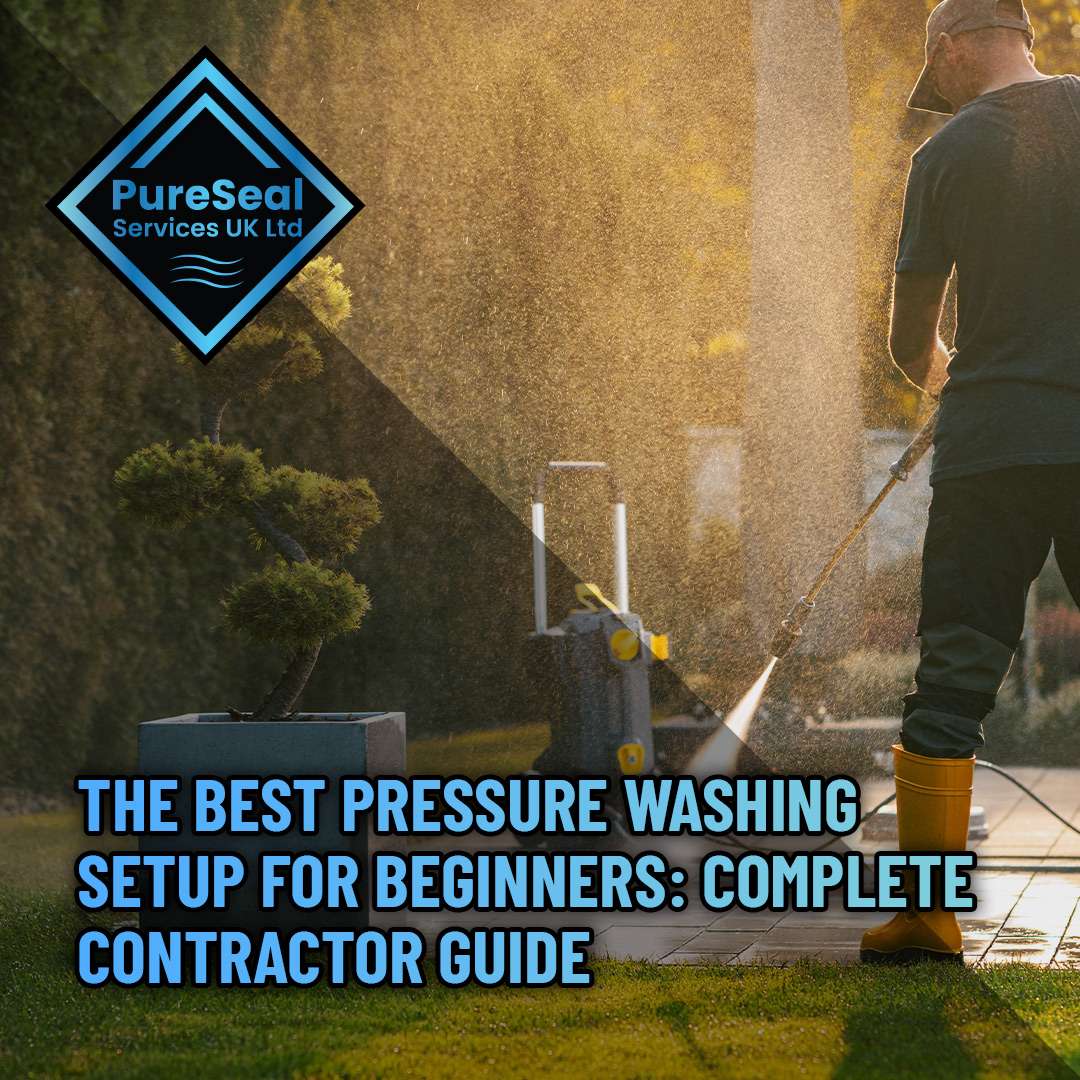
The Best Pressure Washing Setup for Beginners: Complete Contractor Guide
Starting an exterior cleaning business can be an exciting and rewarding opportunity, but choosing the right equipment from day one is essential. Investing in quality machinery rather than the cheapest options helps produce better cleaning results, reduces downtime and gives customers confidence in your business.
Whether you’re planning to clean driveways, patios, walls, commercial premises or industrial buildings, building the right pressure washing setup will save money over the long term.
At PureSeal Services, we believe professional contractors benefit from purchasing reliable equipment that delivers consistent performance rather than constantly replacing budget machines that fail under regular commercial use.
Why Your Initial Setup Matters
Many new contractors make the mistake of buying equipment purely based on purchase price.
A cheaper pressure washer may appear attractive initially, but commercial cleaning places huge demands on pumps, hoses, engines and accessories.
A professional setup offers:
- Better reliability
- Longer service life
- Higher productivity
- Improved cleaning quality
- Reduced maintenance
- Better fuel efficiency
- Increased earning potential
Professional customers notice the difference between someone arriving with consumer-grade equipment and a contractor operating commercial machinery.
What Jobs Will You Be Completing?
Before purchasing equipment, decide which services you intend to offer.
| Service | Equipment Requirements | Difficulty |
|---|---|---|
| Driveway cleaning | High-pressure washer with surface cleaner | Low |
| Patio cleaning | Pressure washer and rotary cleaner | Low |
| Block paving restoration | Pressure washer plus sanding equipment | Medium |
| Wall cleaning | Variable pressure machine | Medium |
| Commercial cleaning | High flow machine | High |
| Farm cleaning | Hot or cold water system | High |
| Car parks | Large surface cleaner | High |
| Industrial cleaning | High-performance commercial setup | Advanced |
Buying equipment suited to future expansion can prevent costly upgrades within your first year.
Cold Water or Hot Water?
One of the first decisions beginners face is choosing between cold and hot water systems.
Cold Water Machines
These are ideal for:
- Patios
- Driveways
- Paths
- Brickwork
- Concrete
- Stone
Advantages include:
- Lower purchase cost
- Simpler maintenance
- Less weight
- Easier transport
- Excellent for most domestic work
Hot Water Machines
Hot water pressure washers excel when cleaning:
- Grease
- Oil
- Commercial kitchens
- Fleet vehicles
- Industrial yards
- Heavy machinery
Advantages include:
- Faster cleaning
- Better grease removal
- Reduced chemical use
- Higher productivity
They are, however, significantly more expensive and generally unnecessary for someone just entering the industry.
Petrol or Electric?
Another major decision concerns the power source.
| Feature | Petrol | Electric |
|---|---|---|
| Portability | Excellent | Limited |
| Domestic work | Excellent | Very Good |
| Commercial work | Excellent | Good |
| Requires mains power | No | Yes |
| Working in remote areas | Excellent | Poor |
| Purchase price | Higher | Lower |
| Maintenance | Higher | Lower |
Most contractors eventually favour petrol-powered commercial machines because they can work virtually anywhere without relying on electricity.
Choosing the Right Pressure
Higher pressure does not always mean better cleaning.
Instead, successful cleaning depends on balancing pressure with water flow.
Typical pressure ranges include:
| Pressure | Suitable For |
|---|---|
| 100–150 bar | Vehicles |
| 150–200 bar | Domestic patios |
| 200–250 bar | Driveways |
| 250–300 bar | Commercial work |
Very high pressure can damage:
- Natural stone
- Roof tiles
- Timber
- Render
- Pointing
- Block paving
Professional contractors understand that technique matters far more than maximum pressure.
Why Water Flow Is Often More Important
Many beginners focus solely on pressure ratings.
Professional cleaners often prioritise litres per minute instead.
Higher flow means:
- Faster rinsing
- Better dirt removal
- Greater productivity
- Less striping
- Improved surface cleaner performance
For example:
| Flow Rate | Suitable Work |
|---|---|
| 9 L/min | Light domestic |
| 11 L/min | Regular domestic |
| 15 L/min | Heavy domestic |
| 18–21 L/min | Commercial cleaning |
A machine with slightly lower pressure but much higher flow often completes jobs considerably faster.
Essential Equipment Every Beginner Needs
A pressure washer alone is only part of a professional setup.
Most contractors require several accessories.
| Equipment | Essential? |
|---|---|
| Pressure washer | ✔ |
| High-pressure hose | ✔ |
| Trigger gun | ✔ |
| Turbo nozzle | ✔ |
| Fan nozzle | ✔ |
| Surface cleaner | ✔ |
| Hose reel | ✔ |
| Water tank (if required) | Recommended |
| Chemical injector | Recommended |
| Extension lance | Recommended |
Buying quality accessories often improves productivity more than buying a slightly larger pressure washer.
Surface Cleaners
Surface cleaners are one of the biggest time-saving investments available.
Benefits include:
- Faster cleaning
- More even finish
- Reduced fatigue
- Less overspray
- Greater customer satisfaction
Instead of cleaning using a standard lance, contractors can clean large areas significantly quicker while achieving a more professional finish.
Hose Length
Many beginners underestimate how important hose length can be.
Longer hoses allow operators to:
- Reach rear gardens
- Clean around buildings
- Reduce machine movement
- Improve efficiency
- Work safely
Typical commercial hose lengths range from 15 to 30 metres.
Buying quality hose rather than budget alternatives usually results in greater durability and fewer failures.
Choosing the Right Nozzles
Different jobs require different spray patterns.
| Nozzle | Best For |
|---|---|
| 0° | Rare specialist use |
| 15° | Heavy dirt |
| 25° | General cleaning |
| 40° | Delicate surfaces |
| Soap nozzle | Chemical application |
| Turbo nozzle | Stubborn staining |
Changing nozzles appropriately helps protect surfaces while maintaining cleaning performance.
Chemical Application Equipment
Pressure alone rarely removes every type of contamination.
Many professional contractors use specialist cleaning chemicals for:
- Algae
- Moss
- Lichen
- Organic staining
- Black spot
- Grease
Using dedicated chemical application equipment provides:
- Better coverage
- Controlled application
- Reduced waste
- Improved safety
Always follow manufacturer guidance and appropriate health and safety procedures when using cleaning chemicals.
Water Supply Considerations
Most domestic properties provide sufficient water flow for standard pressure washing.
However, larger commercial machines may require:
- Buffer tanks
- Water bowsers
- Intermediate storage tanks
Planning your water supply prevents pump starvation, which can seriously damage commercial pressure washers.
Transporting Your Equipment
Your vehicle quickly becomes part of your professional image.
Common options include:
| Vehicle | Suitable For |
|---|---|
| Small van | Domestic work |
| Medium van | Growing businesses |
| Large van | Commercial contractors |
| Trailer setup | Multiple machines |
| Flatbed | Industrial work |
Equipment should always be securely fixed during transport to prevent movement and damage.
Personal Protective Equipment
Safety should never be overlooked.
Essential PPE includes:
- Safety boots
- Waterproof gloves
- Eye protection
- Hearing protection
- High-visibility clothing
- Waterproof clothing
- Protective trousers
Pressure washers can generate enough force to cause serious injury if used incorrectly.
Proper training and safe operating procedures are essential.
Typical Beginner Setup Costs
Investing properly from the outset generally provides better long-term value.
| Equipment | Typical Professional Budget |
|---|---|
| Commercial pressure washer | £2,000–£4,500 |
| Surface cleaner | £400–£900 |
| Hoses and reels | £300–£700 |
| Lances and nozzles | £150–£400 |
| Chemical equipment | £250–£700 |
| PPE | £150–£350 |
| Water tank (optional) | £400–£1,000 |
| Van modifications | £500–£2,500 |
While lower-cost equipment is available, investing in commercial-grade machinery often results in greater reliability, improved efficiency and a more professional image. Businesses aiming to build a long-term reputation frequently find that higher-quality equipment pays for itself through reduced downtime and increased productivity.
Common Beginner Mistakes
Avoiding these mistakes can save thousands of pounds.
Buying Consumer Equipment
Domestic machines rarely withstand daily commercial use.
Choosing Pressure Over Flow
Cleaning speed depends heavily on water volume rather than pressure alone.
Ignoring Maintenance
Routine servicing dramatically extends equipment lifespan.
Using Incorrect Nozzles
Wrong nozzle selection increases cleaning time and may damage surfaces.
Purchasing Cheap Accessories
Budget hoses and fittings often fail long before professional-grade alternatives.
Underestimating Transport Requirements
Equipment quickly outgrows smaller vehicles as businesses expand.
Forgetting Insurance
Public liability insurance is an essential business expense.
Maintaining Your Equipment
Professional equipment represents a significant investment.
Simple maintenance includes:
- Checking oil levels
- Inspecting hoses
- Cleaning filters
- Lubricating moving parts
- Checking fittings
- Winterising equipment
- Replacing worn seals
- Monitoring pump performance
Keeping machinery in excellent condition helps reduce costly repairs and unexpected downtime.
Planning for Future Growth
Many contractors begin with domestic work before expanding into commercial cleaning.
When buying equipment, consider whether it will still meet your needs in two or three years.
Choosing commercial-quality machinery from the beginning can reduce the need for expensive upgrades later, particularly as job sizes increase and customer expectations grow.
Think about future additions such as:
- Larger water tanks
- Dual hose reels
- Additional pressure washers
- Soft washing systems
- Steam cleaning equipment
- Van-mounted installations
- Hot water units
Planning ahead often proves more economical than repeatedly replacing undersized equipment.
Should You Buy New or Used?
This is a common question among new contractors.
Both options have advantages.
| Option | Advantages | Considerations |
|---|---|---|
| New equipment | Warranty, latest technology, known service history | Higher initial investment |
| Used equipment | Lower purchase price, potential savings | May require repairs, unknown maintenance history |
If purchasing used machinery, carefully inspect the pump, engine, hose connections and frame for signs of excessive wear. Any savings made initially can quickly disappear if major repairs become necessary shortly after purchase.
Accessories That Improve Productivity
Once the essentials are covered, several accessories can make your working day easier and improve efficiency.
| Accessory | Benefit |
|---|---|
| Quick-connect fittings | Faster equipment changes |
| Hose reel | Tidier storage and quicker setup |
| Lance holder | Improved organisation |
| Tool box | Secure storage for spare parts |
| Spare nozzle kit | Reduced downtime |
| Pump protector | Helps protect equipment during storage |
| Fuel can | Convenient refuelling on site |
Although none of these are absolutely essential on day one, they help create a more professional setup and reduce time spent preparing between jobs.
Building a Professional Image
Customers often judge a contractor before any cleaning has begun.
A tidy, organised setup demonstrates professionalism and attention to detail.
Simple ways to create a better impression include:
- Keeping hoses neatly coiled
- Cleaning equipment after every job
- Replacing damaged fittings promptly
- Wearing branded workwear
- Using organised storage inside your vehicle
- Maintaining clean, well-presented machinery
Professional presentation helps justify premium pricing and reassures customers that they have chosen an experienced contractor.
Choosing Equipment That Matches Your Business Goals
Not every beginner requires the largest or most powerful machine available. The best setup is one that matches the type of work you expect to undertake while allowing room for growth.
If your focus is domestic driveway and patio cleaning, a high-quality commercial cold-water pressure washer combined with a professional surface cleaner will complete the vast majority of jobs efficiently.
If you intend to expand into commercial exterior cleaning, investing slightly more at the outset in higher flow equipment may prevent expensive upgrades within the first couple of years.
Rather than chasing the lowest purchase price, focus on equipment that delivers dependable performance, excellent cleaning results and long-term reliability. Quality machinery represents an investment in your reputation as much as your business, helping you complete work efficiently while providing customers with the high standard of service they expect.
For contractors looking to build a long-lasting exterior cleaning business, investing in proven professional equipment and trusted products from PureSeal Services provides a solid foundation for future growth, allowing you to tackle a wide range of cleaning projects with confidence while maintaining the premium standards your customers deserve.